About us
EndeavourOS began with a community that refused to disband, and it is still the reason the distro exists.

When the popular Arch-based distro Antergos ended its run in May 2019, it left a friendly and extremely helpful community behind. Within days of the announcement, Bryan Poerwoatmodjo put forward the idea of continuing that community feeling on a new forum, open to any Arch or Arch-based Linux user. The response was enthusiastic enough to get the project going.
Johannes Kamprad, Fernando Omiechuk Frozi and Manuel quickly joined him to set the project up, and when they did, the plan changed: from preserving the old community on a new forum, to creating a new distro with that community at its core.
In turning Endeavour into EndeavourOS, we deliberately travelled a different road than Antergos did. It never was and never will be our intention to be an Antergos clone — our departure point was the Antergos community, not the distro. That is why we let go of our predecessor's look and feel and found our own voice instead.
To keep the project manageable, we decided early in development to provide a basic system that stays close to Arch Linux. We aim at a Linux user with an intermediate level of knowledge, who likes a system that needs hands-on customisation from the outset — with the help of our main standout feature, a vibrant and friendly community.
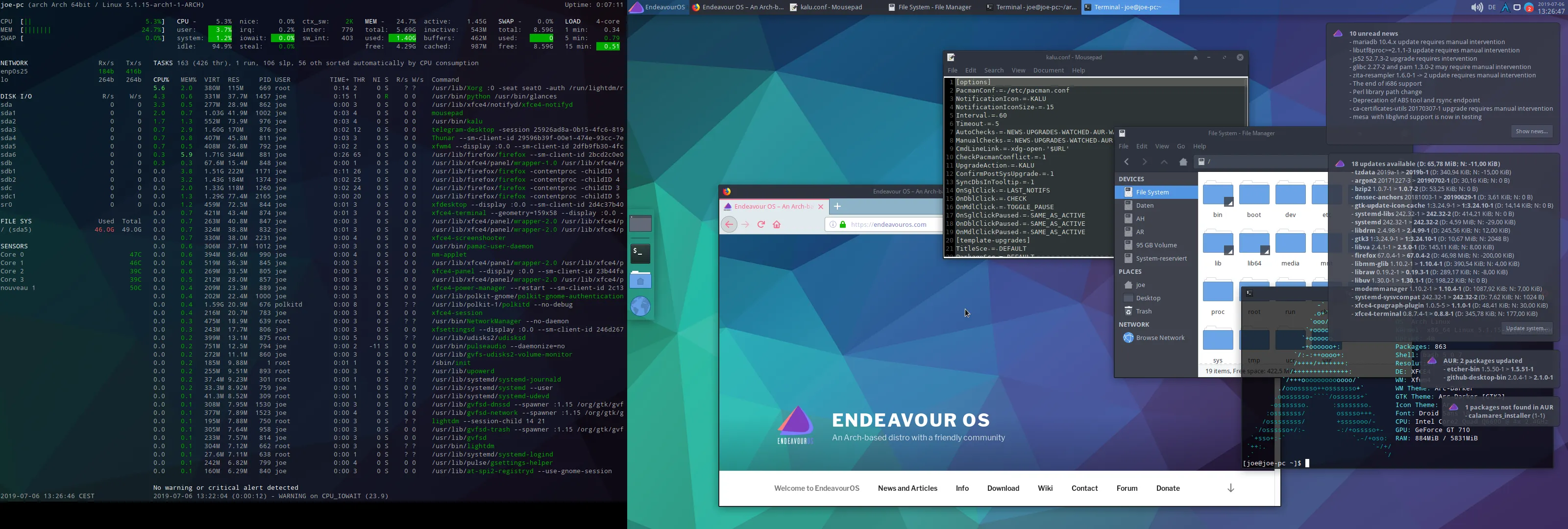
The result was a distro that is lightweight and ships with a minimum of preinstalled apps — an almost blank canvas, ready to personalise. Our first release shipped only an offline installer with our customised Xfce desktop; the online installer arrived on the ISO in December of the same year.
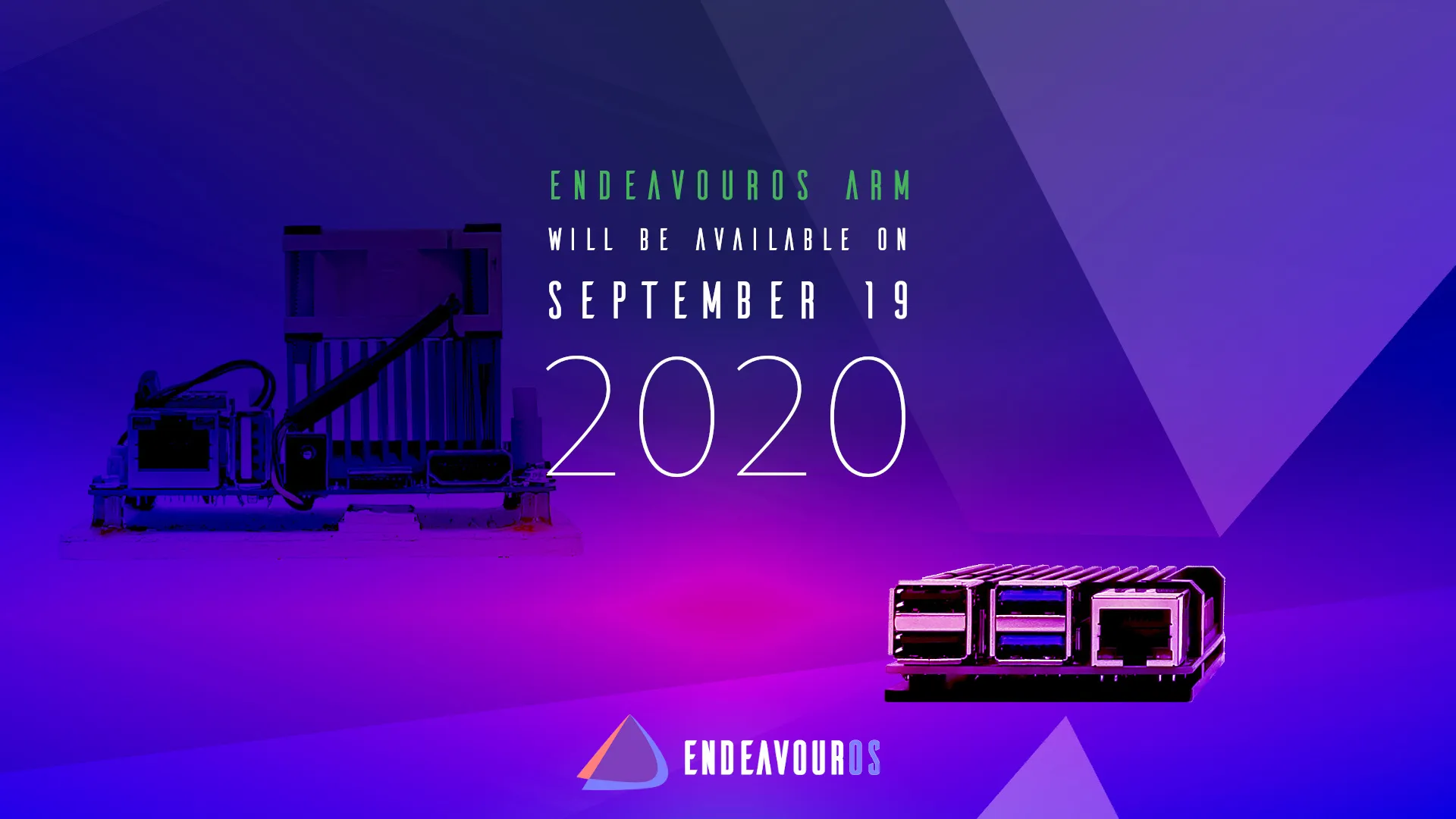
After the online installer launched, community member Pudge challenged himself to get EndeavourOS running on an ARM device. It was meant to be an article for the now-discontinued Discovery magazine, but we approached him about turning it into an official community-driven release instead.
Notable releases
The EndeavourOS website launched.
Launch of the forum.
First offline stable release, with the customised Xfce desktop.
Discovery magazine was launched.
Our first mirror, Alpix, became available.
The first ISO with the combined offline and online installer.
The launch of EndeavourOS ARM.
Discovery magazine was discontinued and became the EndeavourOS knowledge base.
BSPWM and Sway community editions were added to the installer.
The redesigned ISO-Next launched, with a faster installation.
Atlantis 21.4, the first release named after a spacecraft, and the first with the HotFix tool for patching a released ISO.
Atlantis Neo, the first intermediate release to carry the “Neo” suffix, adding the Openbox and Qtile community editions.
Apollo, introducing Worm, an EndeavourOS-exclusive window manager by community editions developer Codic12.
Artemis, shipping semi-automatic ARM installation through Calamares for Odroid and Raspberry Pi — the first major ARM improvement by main developer Sradjoker since the 2020 launch.
Cassini, the first release offering a bootloader choice of none, systemd-boot or GRUB, and the first with Dracut by default instead of mkinitcpio. ARM added official PineBook Pro support.
Cassini Neo, with bug fixes for the newest Intel and Arc machines.
Cassini Nova, with minor but necessary fixes and refreshed package versions.
Cassini Nova R1, a silent rebuild of the Nova ISO.
Cassini Nova R2, bridging the timeline to the Galileo release.
Galileo Neo, on kernel 6.7.1, with Plasma offline and Calamares fixes.
Galileo, streamlining the team’s workflow. KDE Plasma replaced Xfce in the live environment and the offline install, and the community editions were dropped from the installer. ARM added the Raspberry Pi 5b and the Radxa ROCK 5b.
Gemini, the first release built on Qt 6, and the first without ARM install images.
Endeavour, marking the fifth anniversary and the return of ARM support through separate downloadable images.
Endeavour Neo, with fixes for upstream changes to makepkg and pacman, and package renames.
Mercury, adding a memtest entry to the EFI boot options and defaulting the larger desktops to dark mode.
Ganymede, with new support for nvidia-open modules, and broadcom-wl inserted only when needed rather than loaded by default.
Ganymede Neo, with fixes for upstream Nvidia packaging and support changes.
Titan, adding hardware detection for all GPUs and VMs through the new eos-hwtool, and improved mirrorlist handling.
Titan Neo, switching from SDDM to plasma-login-manager on KDE Plasma, with package and mirrorlist generation fixes.
Titan Nova, an update boost bridging the gap to the upcoming Triton release, which will run Wayland in the live environment.
The news archive carries the full announcement for each release.